

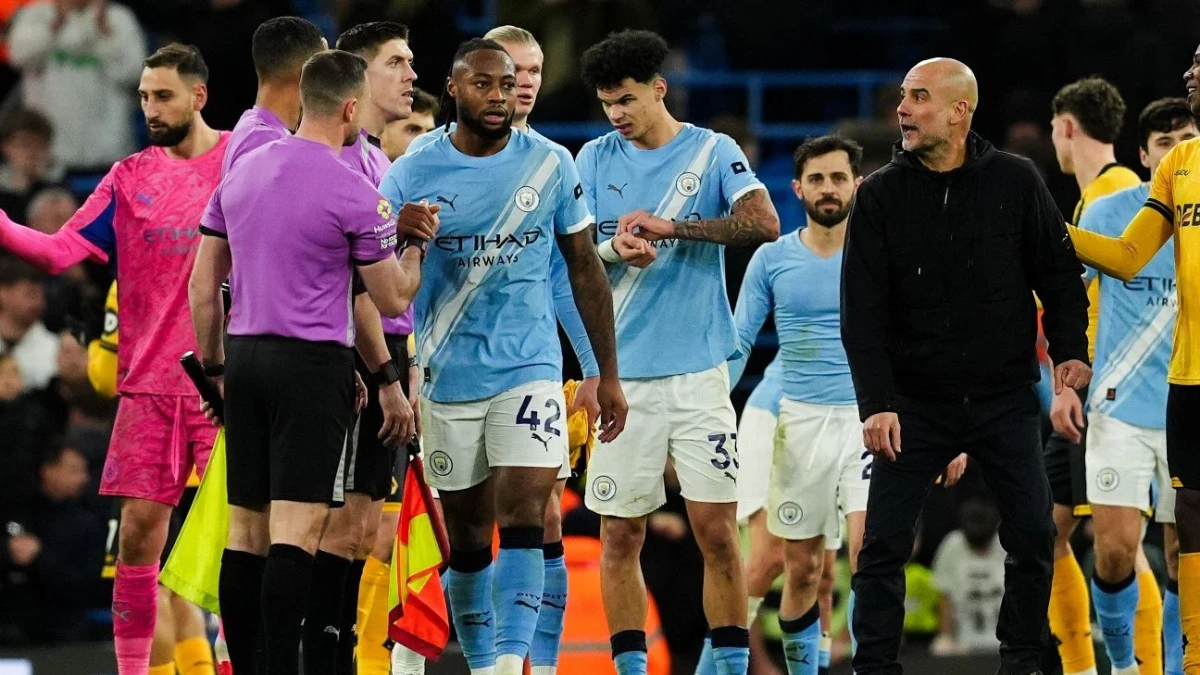
Video Assistant Referee (VAR) decisions continue to be one of the most debated aspects of modern football, and Manchester City once again found themselves at the center of controversy. In a closely contested Premier League match, City were denied a penalty after a VAR review upheld the on-field decision made by a debutant referee.
The incident sparked immediate debate among fans, pundits, and analysts. Was the referee right to stick with the original call, or did VAR miss an opportunity to intervene? To answer that, it’s important to break down the situation calmly, look at the laws of the game, and understand how VAR is supposed to be applied.
The Incident That Sparked the Debate
The moment in question occurred during a tense phase of the match when Manchester City were pushing forward in search of a breakthrough. A City attacker entered the penalty area and went down following contact from a defender. City players appealed instantly, calling for a penalty.
The referee, officiating his first Premier League match, waved play on. VAR then conducted a check, reviewing multiple angles before deciding not to recommend an on-field review. The original decision stood, and play resumed.
Within minutes, the decision became a major talking point — not just because of the call itself, but because of the referee’s lack of top-flight experience.
Understanding VAR’s Role in Penalty Decisions
To properly assess the decision, it’s important to understand what VAR is designed to do.
VAR does not re-referee matches. Its purpose is to correct:
Clear and obvious errors
Serious missed incidents
For penalty calls, VAR only intervenes if:
The referee has clearly missed a foul, or
The on-field decision is demonstrably wrong based on video evidence
If an incident is considered subjective — meaning reasonable referees could interpret it differently — VAR is encouraged to support the original decision.
This principle played a key role in the Manchester City incident.
Was There Contact? Yes — But That’s Not the Full Story
Replays showed there was some contact between the defender and the City attacker. However, football laws are clear that not all contact equals a foul.
To award a penalty, the referee must judge whether:
The contact was careless, reckless, or excessive
The defender unfairly impeded the attacker
The attacker was denied a fair opportunity to continue play
In this case, VAR officials appeared to conclude that:
The contact was minimal
The attacker may have initiated or exaggerated the fall
The defender made a legitimate attempt to play the ball
Because these elements are subjective, VAR chose not to overrule the referee.
The Pressure on a Debutant Referee
One factor that added intensity to the discussion was the referee’s debut status. Officiating a Premier League match — especially one involving Manchester City — is a daunting task for any official.
Debutant referees face:
Increased scrutiny
Intense crowd pressure
High expectations from players and managers
Constant television analysis
Despite this, the referee showed confidence by making an immediate decision and sticking to it even after VAR consultation. That composure is often encouraged by refereeing bodies, as hesitation can undermine authority.
Importantly, VAR exists to support, not replace, the referee — regardless of experience level.
Why VAR Didn’t Send the Referee to the Monitor
One of the most common questions fans ask is:
“Why didn’t VAR ask the referee to review it on the screen?”
The answer lies in VAR protocol.
Referees are only sent to the monitor when:
There is strong evidence the original call was wrong
Video footage clearly contradicts the on-field decision
In this case, the footage did not reach that threshold. While some angles suggested contact, none conclusively proved that a foul had occurred. As a result, VAR officials determined that the decision was not a clear and obvious error.
Reaction From Players and Fans
Manchester City players were visibly frustrated by the outcome, appealing both during and after the VAR check. From their perspective, any contact in the box during an attacking move can feel like a missed opportunity.
Fans reacted strongly on social media, with opinions split:
Some believed City were unfairly denied a penalty
Others felt the attacker went down too easily
Neutral observers pointed to the consistency of VAR decisions this season
Such divided reactions often suggest that VAR made the technically correct call, even if it wasn’t universally popular.
Consistency: The Bigger VAR Issue
The controversy surrounding this incident highlights a broader concern: consistency.
Fans often question why:
Similar incidents lead to penalties in some matches
Others are waved away with minimal explanation
While this can be frustrating, it’s important to remember that:
Context matters (speed, angle, intent)
Referees judge each situation independently
VAR thresholds remain intentionally high
In recent seasons, officials have been encouraged to allow more physicality, particularly in the penalty area. That shift may explain why some borderline incidents no longer result in spot-kicks.
Did the Referee Apply the Laws Correctly?
Based on available evidence and VAR guidelines, the referee’s decision aligns with current interpretations of the laws of the game.
Key points supporting the decision:
Contact alone does not equal a foul
The defender appeared to make a genuine challenge
The attacker was not clearly impeded
VAR found no obvious error
From a purely technical standpoint, the decision to deny the penalty was defensible and consistent with VAR protocol.
What This Means for Manchester City
While the decision was frustrating for City, it serves as a reminder that:
Not every penalty appeal will be rewarded
VAR is not designed to favor attacking teams
Control and finishing remain crucial regardless of officiating decisions
Top teams often face packed defenses, making penalty appeals more frequent — but also more heavily scrutinized.
Lessons for Referees and VAR Going Forward
For referees, especially debutants, this incident highlights the importance of:
Clear decision-making
Confidence in applying the laws
Effective communication with VAR officials
For VAR itself, transparency remains key. Clearer explanations — whether through broadcasts or post-match reports — could help reduce confusion and frustration among fans.
Final Verdict: Right Call or Missed Opportunity?
After reviewing the incident within the framework of the laws of the game and VAR guidelines, the decision to deny Manchester City a penalty appears to be correct.
While the incident was debatable and understandably controversial, it did not meet the standard required for VAR intervention. The debutant referee showed composure, and VAR appropriately supported the on-field call.
That may not satisfy everyone, but it reflects how modern football officiating is intended to function.