

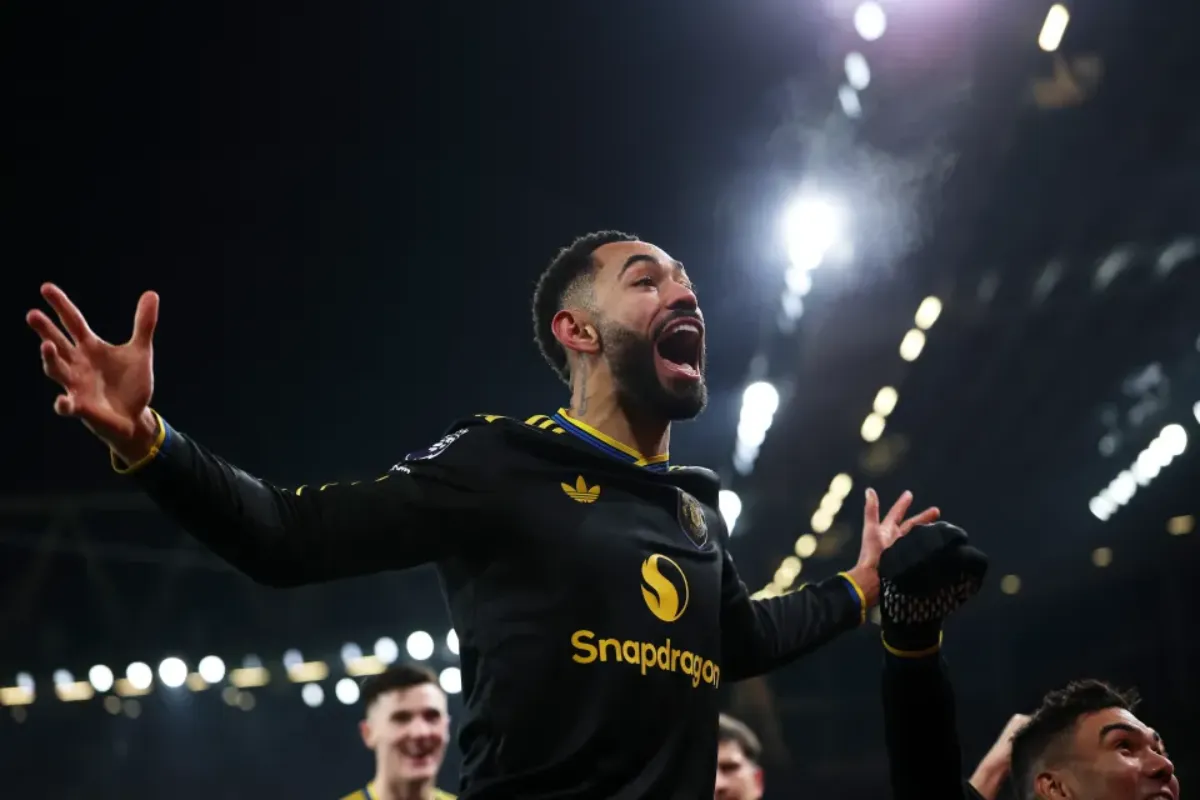
Arsenal’s Premier League title ambitions suffered a significant blow after Manchester United staged a dramatic comeback to secure a 3–2 victory at the Emirates Stadium. In a season where consistency and control are vital, the defeat represented more than just dropped points. It exposed weaknesses that could prove costly as the title race intensifies.
For much of the campaign, Arsenal have been praised for their structure, attacking clarity, and resilience. Yet against United, familiar problems resurfaced at the worst possible time, allowing a direct rival to leave north London with a statement win and renewed confidence.
A Promising Start Undone by Missed Control
Arsenal entered the match knowing the importance of a home victory. With pressure mounting in the title race, the atmosphere at the Emirates reflected both belief and urgency. The Gunners began brightly, dictating possession and pushing United deep into their own half.
Their early dominance was rewarded with an opening goal that underlined their attacking quality. Quick passing, intelligent movement, and confident execution gave the impression of a team in command. At that moment, Arsenal looked capable of extending their lead and turning the match into a comfortable afternoon.
However, what followed was a failure to control the game after scoring. Instead of slowing the tempo and tightening their defensive shape, Arsenal continued to push aggressively. This approach left space behind the midfield, offering Manchester United opportunities they were always likely to exploit.
United’s Tactical Patience Pays Off
Manchester United arrived with a clear plan. Rather than contest Arsenal’s dominance of possession, they focused on compact defending and rapid transitions. This patience proved decisive.
United’s equalizer came from a swift counterattack that caught Arsenal’s defensive line out of position. The goal shifted the momentum and highlighted Arsenal’s vulnerability when possession is lost in advanced areas.
As the match progressed, United grew in confidence. Their second goal further punished Arsenal’s lack of defensive awareness, turning the game around and placing the home side under unexpected pressure.
United’s efficiency contrasted sharply with Arsenal’s approach. Where Arsenal required sustained pressure to create chances, United needed only brief moments of space to make an impact.
Defensive Lapses at a Critical Moment
The defeat once again raised concerns about Arsenal’s defensive concentration in high-stakes matches. While their overall defensive record remains strong, isolated lapses have become increasingly costly.
Several issues were evident:
Slow reactions during counterattacks
Poor positioning between midfield and defense
Inconsistent marking inside the penalty area
These problems allowed United to convert limited chances into goals. At this stage of the season, such mistakes carry greater consequences, particularly against opponents capable of punishing them ruthlessly.
For a team chasing the title, fine margins often determine success or failure. Arsenal were on the wrong side of those margins in this match.
A Brief Revival That Fell Short
To their credit, Arsenal showed character after falling behind. Increased urgency and attacking intent led to an equalizer that reignited belief among players and supporters alike.
At 2–2, the momentum appeared to swing back in Arsenal’s favor. The Emirates responded, sensing an opportunity for the team to push on and reclaim control of the match.
Yet this phase also exposed a recurring issue. Arsenal struggled to balance their desire to win with the need for defensive stability. As they committed more players forward, spaces opened once again, inviting United to strike.
The winning goal arrived late and felt painfully familiar. A lapse in concentration, combined with a lack of pressure on the ball, allowed United to deliver the decisive blow.
The Psychological Impact on the Title Race
Beyond the immediate loss, the defeat carries psychological weight. Title challenges are built on momentum, belief, and composure. Losing a home match after leading disrupts all three.
Arsenal’s rivals will take note of this result. It reinforces the idea that Arsenal can be unsettled when forced into open, transitional matches. Teams with pace and direct intent may increasingly adopt similar tactics.
The loss also hands an advantage to competing title contenders, who will see an opportunity to apply pressure as the season progresses. In a tightly contested league, setbacks like this can linger.
Tactical Questions for Mikel Arteta
While Arsenal’s overall progress under Mikel Arteta remains clear, this match invites renewed scrutiny of tactical decision-making in key moments.
Questions will be asked about:
Game management after taking the lead
Defensive structure when protecting results
In-game adjustments when momentum shifts
Arteta has built a team capable of controlling matches, but control must extend beyond possession. Knowing when to slow the game, close spaces, and protect a result is essential for champions.
Addressing these details could define whether Arsenal’s title bid regains strength or continues to falter.
Manchester United’s Boost at Arsenal’s Expense
For Manchester United, the comeback victory represents a significant step forward. Winning away against a title contender provides confidence and reinforces belief in their tactical approach.
United’s discipline, composure, and efficiency were decisive. They accepted periods without the ball and trusted their ability to exploit Arsenal’s weaknesses when opportunities arose.
The result also strengthens United’s own objectives, whether in securing a strong league finish or rebuilding momentum after an inconsistent run of form.
Fan Reaction and Growing Pressure
Arsenal supporters responded with frustration and disappointment. The sense was not merely about losing, but about losing in a manner that felt avoidable.
As expectations rise, patience becomes thinner. Repeated defensive errors and missed opportunities to close out games increase pressure on players and staff alike.
However, the season is not defined by one match. How Arsenal respond in the coming weeks will determine whether this defeat becomes a turning point or a temporary stumble.
What Arsenal Must Do to Recover
To keep their title hopes alive, Arsenal must address several key areas:
Improve defensive discipline during transitions
Manage tempo more effectively after scoring
Maintain composure in decisive moments
Consistency, rather than brilliance, often wins titles. Reducing avoidable mistakes and maximizing control in critical phases will be essential.
Final Thoughts
Arsenal’s title bid was dented, but not destroyed, by Manchester United’s comeback victory. The defeat served as a reminder that fine margins, concentration, and game management are just as important as attacking quality.
United deserved credit for their resilience and execution, while Arsenal were left to reflect on missed chances and costly lapses. In a season where every point matters, this result may prove pivotal.
Whether Arsenal can absorb this setback and respond with authority will define the next chapter of their title challenge.